
Case Study: Achieving the Perfect Folded Edge on 3mm Neoprene
Abstract: 3mm Neoprene is the gold standard for durability, but its high-elasticity SCR core makes precision folding a significant engineering challenge. This case study analyzes how NeopreneX uses High-Frequency Voltage Pre-creasing to neutralize material memory, ensuring a surgical-grade straight-stitch finish for premium products.
The Bottleneck of Traditional Edge Finishing
For decades, Neoprene manufacturing has relied on two primary methods:
Binding (Inner/Outer)
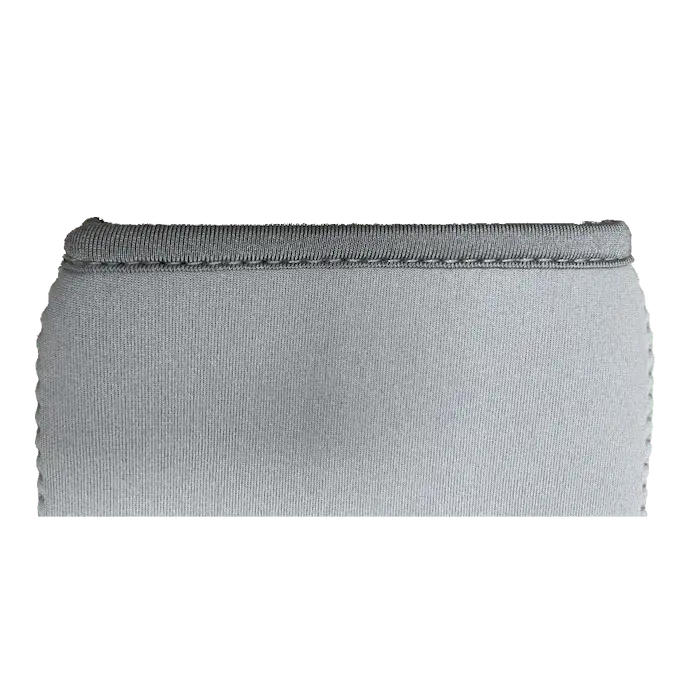
Binding (Inner/Outer): Often creates a bulky “step” inside or introduces an extra material layer that disrupts the minimalist design of premium products like iPad sleeves or luxury cosmetic bags.
Overlocking (Serging)
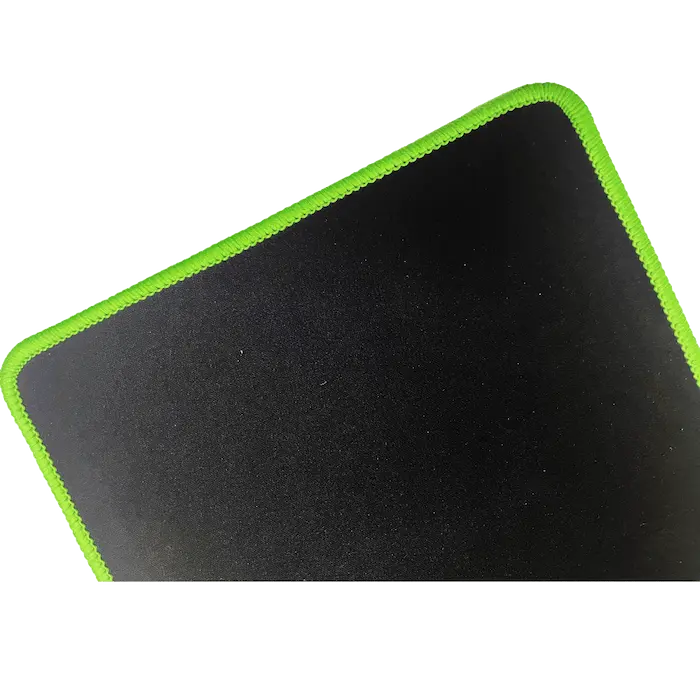
Overlocking (Serging): While functional, it lacks the “sealed” density required for professional gear, often exposing the raw rubber core over time.
The Core Challenge: Why is “Folding” so difficult on Neoprene? Unlike leather or cotton, Neoprene’s high-elasticity SBR/SCR core possesses a “physical memory.” When folded, the internal stress causes the material to push back, leading to stitching wobbles and uneven needle paths.
The Engineering Solution—High-Frequency Voltage Pre-creasing
At NeopreneX, we solved this by introducing the Voltage Fold Technique.
To neutralize the rubber’s memory without damaging the SCR core, we conducted controlled tests to identify the optimal “Molecular Reset” parameters for 3mm material:
Experimental Data: Finding the "Sweet Spot"
| Experiment ID | Temperature (°C) | Dwell Time (s) | Result / Observation |
|---|---|---|---|
| Test #1 | 180°C | 40s | Incomplete molecular reset; fold line tends to "spring back" after 2 hours. |
| Test #2 | 220°C | 20s | Surface scorch detected; rubber core shows signs of thermal degradation. |
| Optimal #3 | 200°C | 30s | Perfect "Fold Memory"; zero damage to integrity; linear stitching stability. |
Practical Application—Zipper Integration
This technique is particularly critical for zipper attachments. A folded-edge zipper provides a cleaner, “hidden” look that reduces water ingress and prevents the zipper head from snagging on loose fibers, a common failure point in standard neoprene pouches.
Standard Execution: Uncontrolled Stitching Waves
Without neutralizing the material’s “Physical Memory,” the high-elasticity 3mm SCR core creates unpredictable resistance against the sewing foot. This force causes the needle to drift, resulting in visible Stitching Waves and uneven margins. For premium brands, this distortion is a primary failure point in perceived product quality.
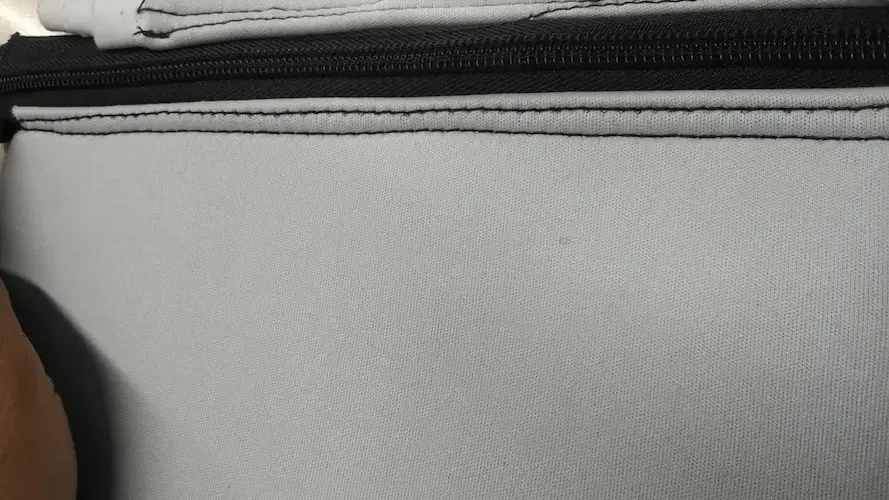
NeopreneX Precision: HF Pre-creased Linear Stability
By implementing our 200°C / 30s High-Frequency Pre-creasing process, we reset the molecular memory at the fold line. This creates a permanent, stable “Guide Track” for the operator. The result is a surgical-grade, perfectly straight stitch that remains parallel to the edge, providing a seamless, high-end finish that defines luxury in functional gear.
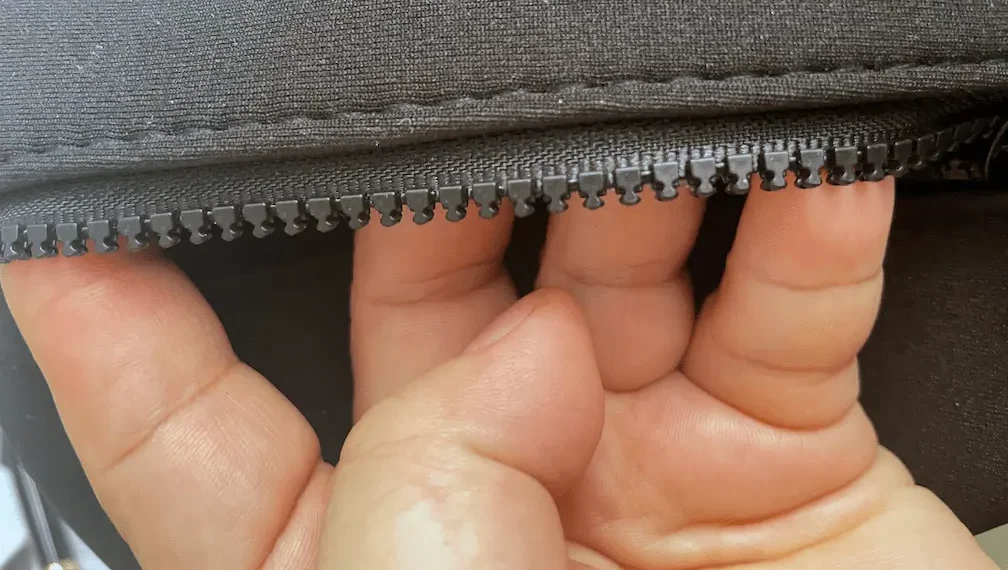
R-Angle Compensation & Precision Tracks
The success of the fold relies on two engineering factors:
R-Angle Offset: Our molds are engineered with a specific radius to compress the 3mm SCR core without tearing the outer fabric.
Magnetic Track: The 200°C pre-crease creates a permanent “groove,” acting as a physical guide for the operator to maintain absolute linear accuracy during sewing.
Global Technical Support & Engineering Integrity
At NeopreneX, we understand the regional nuances of industrial manufacturing. Whether you are sourcing premium neopren stoff for the German precision market or high-performance tela neopreno for Spanish-speaking fashion and medical brands, our engineering standards for folded-edge technology remain the global benchmark. We ship our engineered solutions worldwide.
Technical consultation is more than just a sale. We believe that sharing engineering data is the first step toward a perfect product. If you are struggling with edge-finishing or material distortion on your current project, feel free to reach out for a Technical Brainstorm. No sales pitch, just pure engineering.
Frequently Asked Questions
Not with voltage pre-creasing. Our process neutralizes the rubber’s memory at the fold line, allowing for a slim, professional profile without the bulk of traditional binding.
200°C is the critical stabilization threshold for SCR. By limiting the Dwell Time to 30 seconds, we penetrate the core while protecting the surface jersey from heat damage.
Yes. The folded edge hides the raw cut, creating a natural moisture barrier. When paired with waterproof zippers, it offers superior protection for electronics and swimwear.