
Beyond the "Neoprene Rash": A Technical Guide to Managing Skin Sensitivity in Medical Braces

By Harry  | Technical Specialist | ISO Lead Auditor | March 21, 2026
In 20 years of auditing rubber lines across Asia, I’ve seen one mistake cost brands millions: confusing a chemical allergy with a sweat trap. If your orthopedic brace is hitting a $15\%$ return rate due to “skin irritation,” stop looking for a better marketing slogan and start looking at your material modulus.
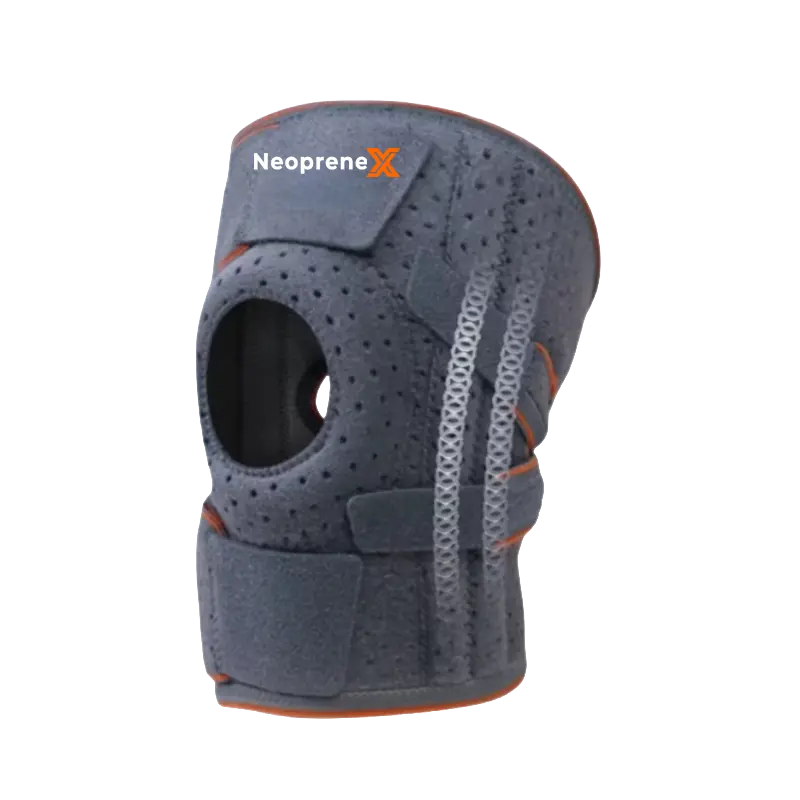
⚡ Key Takeaways:
- Point 1:Distinguishing "Allergy" from "Irritation": Real neoprene allergy is often a reaction to accelerators like ETU used in CR vulcanization, but many cases are actually "heat rash" caused by sweat trapped against the skin.
- Point 2:100% CR-Free Solution: SBR (Styrene Butadiene Rubber) is molecularly free of chloroprene, providing a definitive engineering path to eliminate specific CR-related chemical allergens.
- Point 3:The 4-9° Shore C "Sweet Spot": For joint supports (elbow, knee, wrist), Shore C 4-9° offers the ideal balance between "meaty" tactile comfort and the compressive modulus needed for orthopedic stability.
- Point 4:Engineering Breathability: Because all rubber foam is naturally closed-cell and non-breathable, mechanical perforation is the only way to create active airflow and prevent skin maceration.
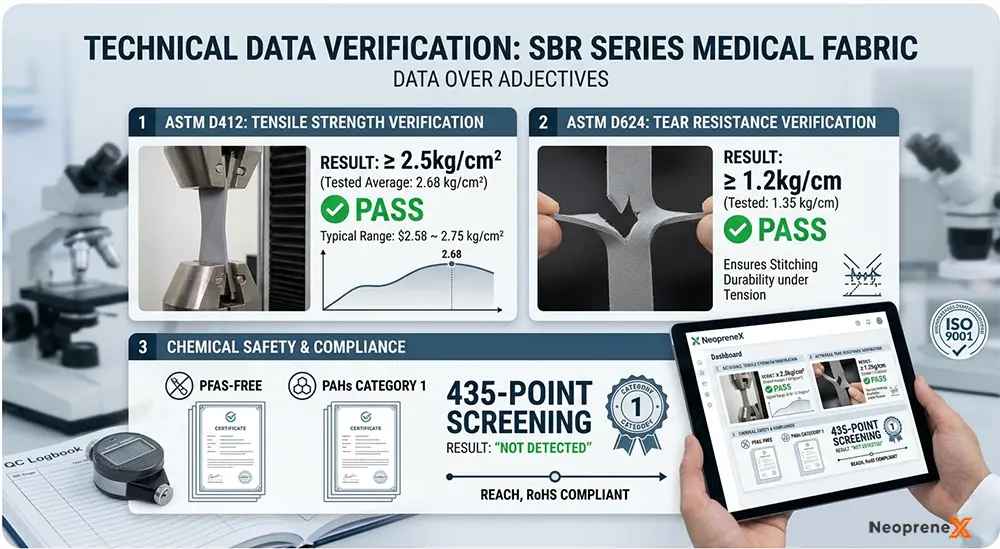
- Data-Driven Compliance: Professional selection is based on verified standards, including ASTM D412 tensile strength ($\ge 2.5kg/cm^2$), ASTM D624 tear resistance ($\ge 1.2kg/cm$), and comprehensive 435-point PFAS-free screening.
📖 Table of Contents
1. Let’s separate the two things everyone confuses
“Neoprene Allergy” is a lazy term used to describe two very different technical failures:
True Chemical Sensitivity: This is an immune response to specific accelerators like ETU (Ethylenethiourea) used in Chloroprene Rubber (CR) vulcanization.
Contact Dermatitis (Heat Rash): This is a mechanical failure. Your closed-cell foam is trapping sweat and bacteria against the skin.
Switching to SBR (Styrene Butadiene Rubber) removes the CR molecule and its catalysts entirely. But if you don’t solve the airflow, you’re just switching one type of rash for another.
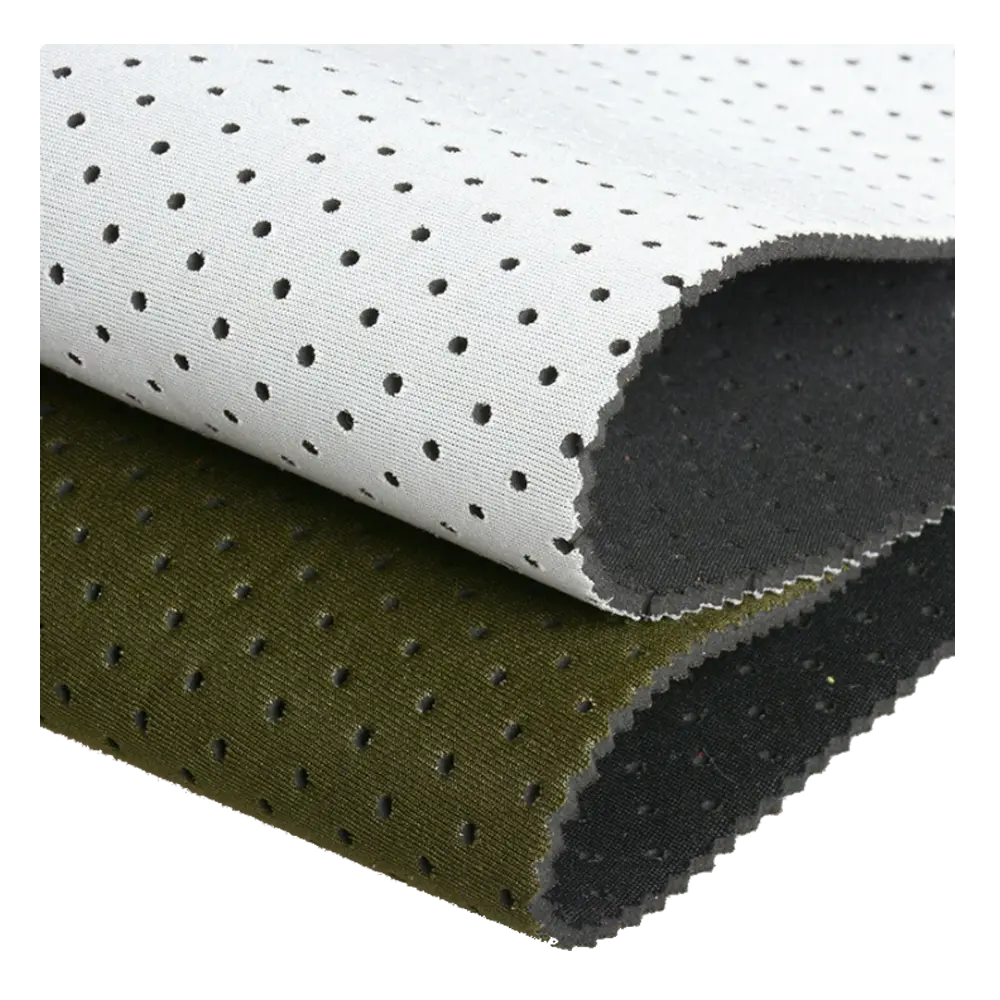
Engineering the Solution: > Left side shows our SBR 4-9° core with 2mm laser-cut perforation. We don’t just switch the molecule to eliminate CR allergens; we mechanically vent the heat trap to prevent skin maceration.
2. Hardness: Why 4-9° is the only range that works
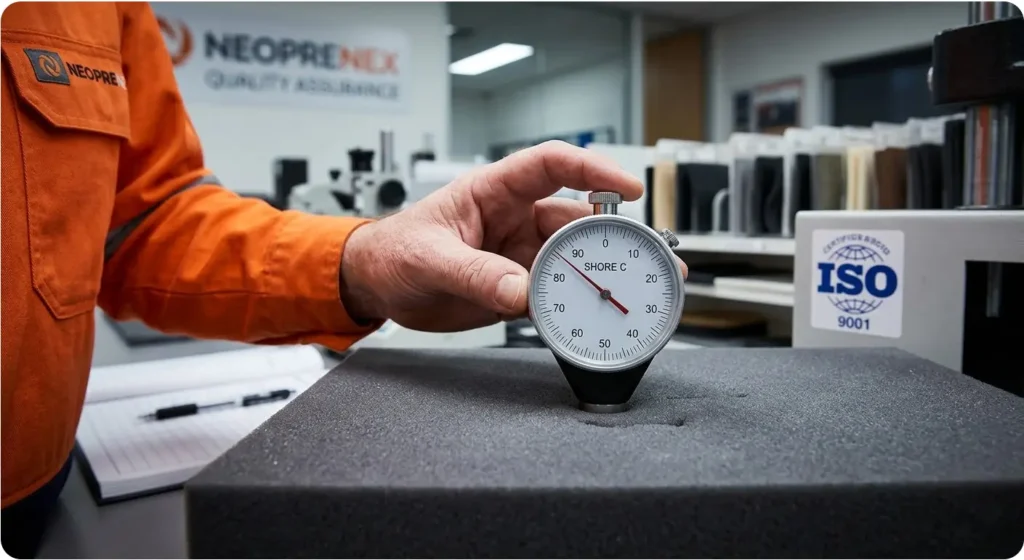
In engineering, there is no “golden hardness,” only functional fitness. For joint supports like elbows and knees, we prioritize a Shore C hardness of 4-9° (ASTM D2240):
Why not <3°? It’s too soft. It lacks the compressive modulus to support a joint under load.
Why not >10°? It’s too stiff. It loses the “meaty” hand-feel required for long-term patient compliance.
I’ve seen suppliers pushing standard SBR 2° or even EVA for orthopedics to cut costs. Don’t. They delaminate under shear stress within 3 months, and your brand pays the price.
3. The 18% Failure: A Case Study in Sweat Traps
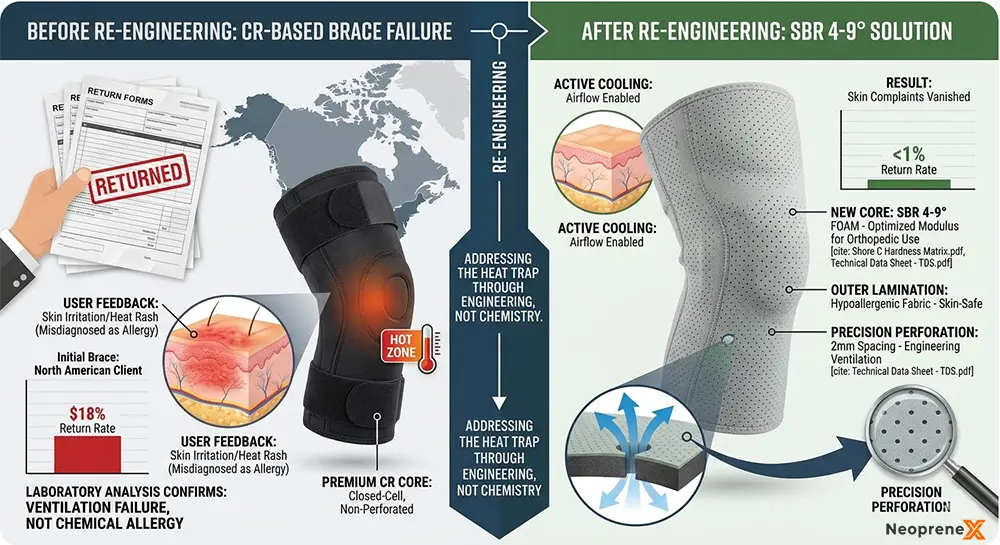
Last year, I consulted for a North American brand whose premium CR-based knee brace was facing an $18\%$ return rate. Laboratory testing confirmed it wasn’t a chemical allergy; it was a ventilation failure.
We re-engineered the line using SBR 4-9° laminated with hypoallergenic fabrics and implemented a 2mm-spaced precision perforation. By addressing the heat trap through engineering, their skin-related complaints effectively vanished.
4. Data: We don’t hide behind "Premium" marketing
At NeopreneX, we define safety through raw data, not adjectives:
Tensile Strength: Our SBR series hits $\ge 2.5kg/cm^2$ (typically testing at $2.58 \sim 2.75 kg/cm^2$) per ASTM D412.
Tear Resistance: Measured at $\ge 1.2kg/cm$ (ASTM D624), so your stitching won’t fail under tension.
Chemical Proof: 435-point PFAS-Free screening and PAHs Category 1 certification.
5. Perforation: You can't cheat physics
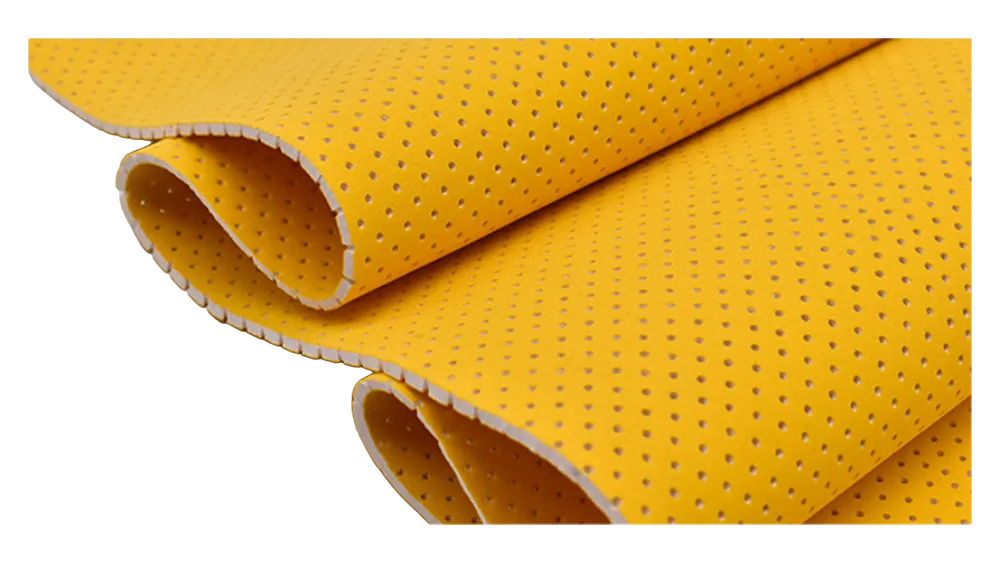
No rubber foam is naturally “breathable”—physics doesn’t work that way. We solve this through Mechanical Perforation. This allows the SBR to maintain its $\ge 250\%$ elongation while creating a forced-air cooling system for the skin.
Conclusion
If your current supplier can’t show you a perforation pattern test report or distinguish between Shore C and Shore A hardness, you’re not managing risk—you’re gambling on returns. At NeopreneX, we don’t gamble. We test, we audit, and we supply.
Frequently Asked Questions
- Yes. While many suppliers confuse SBR with Neoprene, our SBR (Styrene Butadiene Rubber) is molecularly 100% free of Chloroprene Rubber (CR). This eliminates the specific chemical allergens, such as ETU accelerators, commonly found in traditional Neoprene that cause skin reactions in medical applications.
- In the foam industry, Shore C is the precise standard for measuring soft microcellular structures. Using Shore A for medical foam is often too blunt an instrument. Our 4-9° Shore C range is engineered to provide the exact “compressive modulus” required for orthopedic support—firm enough to stabilize a joint, but soft enough for 8-hour patient compliance.
- It’s a calculated balance. By using a 2mm-spaced precision perforation pattern, we maintain a tensile strength of $\ge 2.5kg/cm^2$ (ASTM D412). This ensures the material provides active airflow without the risk of tearing at the stitching points under high-tension medical use.
We don’t ask you to take our word for it. Every batch of NeopreneX medical fabric undergoes a 435-point screening process. We provide full laboratory reports covering REACH, RoHS, and PAHs Category 1 compliance, ensuring the material is safe for direct, long-term skin contact.
Absolutely. As a technical manufacturer, we can adjust hole diameter and spacing based on your breathability requirements. We recommend a technical audit of your prototype to determine the optimal balance between airflow and structural support.