
The Definitive Neoprene Sustainability Audit: Engineering Performance with Responsibility

By Harry  | Technical Specialist | ISO Lead Auditor | March 27, 2026
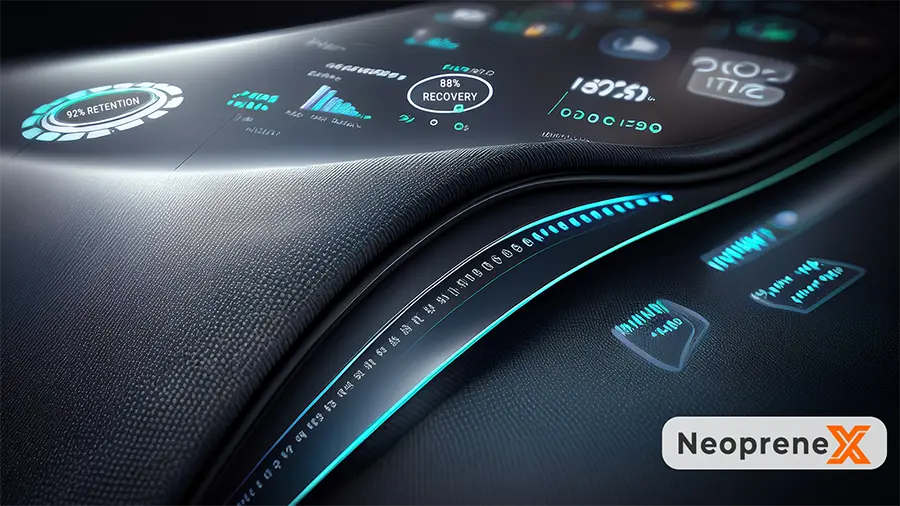
⚡ Technical Summary & Key Takeaways:
Executive Summary: This technical audit outlines the path toward a “Circular Neoprene Economy.” We examine the performance parity between recycled and virgin polychloroprene based on the 92/88 Performance Index. Furthermore, we introduce an Audit-Driven Zero-Waste Model via our 12-unit starter packs to help brands validate market demand without upfront manufacturing waste.
📖 Table of Contents
1.Defining the Audit: Beyond Greenwashing Narratives

In an industry where “eco-friendly” is often used as a vague marketing term, a true technical audit must be grounded in verifiable data. With over 20 years of expertise in material engineering , we believe that sustainability fails when a product’s durability leads to premature disposal. Our audit process ensures that environmental transitions do not compromise the fundamental protection—the “Armor”—that defines high-performance neoprene.
2. The 92/88 Performance Index: Benchmarking Recycled Integrity

To establish a technical anchor, we utilize a 92/88 Performance Index when evaluating our premium recycled neoprene scrap (PIR/PCR) against traditional virgin petroleum-based standards:
- 92% Tensile Strength Retention: Evaluated under [ASTM D412] standards, our recycled composites maintain nearly total structural parity with virgin material.
- 88% Compression Recovery: Tested via [ASTM D3574], ensuring the material resists permanent deformation after thousands of use cycles.
- Carbon Impact: These metrics result in a 15% reduction in carbon footprint per kilogram compared to standard virgin production.
- Technical Data: These benchmarks are verified through our current laboratory testing
[INTERNAL LINK: PDF Report Download].
3. Structural Armor: Engineering Durability into the Lifecycle
The “Armor” of a NeopreneX product is found in its lamination and structural design. By transitioning toward Limestone-based formulations and exploring Bio-based chloroprene , we enable the creation of high-margin assets that do not sacrifice resilience for the sake of a “green” label. Our focus remains on the longevity of the composite, ensuring that recycled fibers maintain the same high-resolution finish and hand-feel expected by luxury brands.
4. Zero-Waste Validation: The 12-Unit Sublimation Magnetic Can Koozie Starter Pack
A significant environmental hazard in modern supply chains is “Dead Inventory”—the waste generated by unsold units and upfront material impact. We recommend the 12-Unit Sublimation Magnetic Can Koozie Starter Pack as a core component of a zero-waste market validation model.
Agile Auditing: Brands can verify 4K sublimation resolution and consumer response with minimal resource commitment.
Thermal Protection Engineering: Our structural audit confirms that when pressed according to our recommended temperature and time parameters, the flattened 6mm protection zone (3mm + 3mm) effectively shields magnets from direct heat damage.
Sublimation Blanks: This model provides a low-risk entry for the DIY community to test magnetic integrity without the overhead of bulk manufacturing.Sublimation Blanks (Launch April 2026 – Inquire Now)
5. Conclusion: Technical Transparency as a Standard
Sustainability is not a static goal but a continuous engineering audit. By combining high-performance recycled composites with agile validation models like our 12-Unit Starter Pack, NeopreneX provides a verified technical resource for professionals who prioritize both performance and responsibility.
Explore our latest sustainable gear and high-margin assets at our catalog, or contact us for a customized material audit.
Frequently Asked Questions
- Not significantly. Our latest audit shows that premium recycled composites (PIR/PCR) maintain a 92% tensile strength retention and 88% compression recovery compared to virgin petroleum-based neoprene. When engineered correctly, the durability gap is virtually indistinguishable in consumer goods.
- Unlike traditional neoprene derived from petroleum, Limestone-based formulations use calcium carbonate from the earth. This reduces the overall carbon footprint by approximately 30% during the production phase , while maintaining high-temperature stability up to 150°C—essential for quality sublimation.
- Manufacturing waste is often driven by unsold bulk inventory. By using our 12-Unit Sublimation Magnetic Can Koozie Starter Pack, brands can conduct a “Market Audit” to verify design popularity and technical performance (such as magnetic integrity) before committing to large-scale production. This agile model minimizes the carbon cost of dead inventory and unnecessary shipping.
Yes. High-quality recycled neoprene remains stable under standard heat-press parameters. To ensure the safety of integrated magnets, we recommend the “Flattened 6mm Fold” technique. By pressing the koozie in its flattened state, the two $3\text{mm}$ layers create a thermal barrier that shields the magnets from direct heat damage.